The Anatomy of the Fetal Pig
In this activity, you will open the abdominal and thoracic cavity of the fetal pig and identify structures. Remember, that to dissect means to "expose to view" - a careful dissection will make it easier for you to find the organs and structures. Be sure to follow all directions.
| The
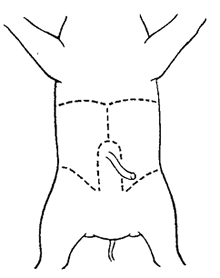
Incision Place your fetal pig in the dissecting pan ventral side up. Use string to "hog-tie" your pig so that the legs are spread eagle and not in your way. Use scissors to cut through the skin and muscles according to the diagram. Do not remove the umbilical cord. In the first section, you will only examine the abdominal cavity (the area below the ribcage). After completing the cuts, locate the umbilical vein that leads from the umbilical cord to the liver. You will need to cut this vein in order to open up the abdominal cavity. Pin the skin and muscle to the side so that the internal organs are visible. Your pig may be filled with water and preservative, drain over the sink if necessary and rinse organs.
|
 |
Locate each of the following organs below, check the box when you have located the structure.
| 1. Diaphragm. This muscle divides the thoracic and abominal cavity and is located near the ribcage. The diaphragm aids in breathing. |  |
| 2. Liver. This structure is lobed and is the largest organ in the body. The liver is responsible for making bile for digestion. | |
| 3. Gall bladder. This greenish organ is located underneath the liver, the bile duct attaches the gall bladder to the duodenum. The gall bladder stores bile and sends it to the duodenum, via the bile duct. | |
| 4. Stomach. A pouch shaped organ that rests just underneath and to the pig's left. At the top of the stomach, you'll find the esophagus. The stomach is responsible for churching and breaking down food. | |
| 5. The stomach leads to the small intenstine, which is composed of the duodenum (straight portion just after the stomach) and the ileum (curly part). The ileum is held together by mesentary. In the small intestine, further digestion occurs and nutrients are absorbed through the arteries in the mesentary. | |
| 6. Pancreas: a bumpy organ located along the underside of the stomach, a pancreatic duct leads to the duodenum. The pancreas makes insulin, which is necessary for the proper uptake of sugars from the blood. | |
| 7. Spleen: a flattened organ that lies across the stomach and toward the extreme left side of the pig. The spleen stores. | |
| 8. At the end of the ileum, where it widens to become the large intestine, a "dead-end" branch is visible. This is the cecum. The cecum helps the pig digest plant material. | |
| 9. The large intestine can be traced to the rectum. The rectum lies toward the back of the pig and will not be moveable. The rectum opens to the outside of the pig, or the anus. The large intestine reabsorbs water from the digested food, any undigested food is stored in the rectum as feces. | |
| 10. Lying on either side of the spine are two bean shaped organs: the kidneys. The kidneys are responsible for removing harmful substances from the blood, these substances are excreted as urine. (more on this later) | |
| 11. Two umbilical vessels can be seen in the umbilical cord, and the flattened urinary bladder lies between them. | |
 |
Identify the
structures on the diagram. 1. ________________________________ 2. ________________________________ 3. ________________________________ 4. ________________________________ 5. ________________________________ 6. ________________________________ 7. ________________________________ 8. ________________________________ 9. ________________________________ 10. _______________________________ 11. _______________________________ 12. _______________________________ 13. _______________________________
|
Fetal Pig: Circulatory System
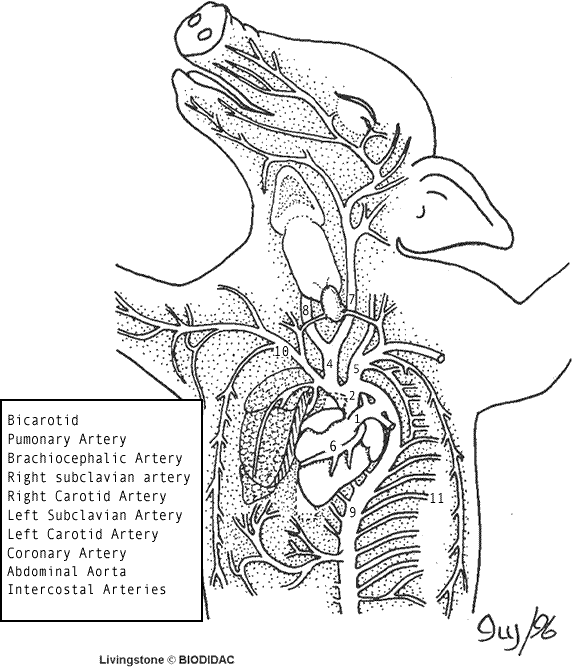
The best way to view arteries is to carefully tease and pick the tissue surrounding the article with a dissecting pin. It is important that you do not break the vessels, since it is very difficult to determine the name of a vessel unless you can see where it comes from and where it goes.
| 1. Revisit the heart and make sure you know the names of the chambers (atrium, ventricle). Observe the coronary vessels on the outside of the heart - these vessels supply blood to the muscle of the heart. | |
| 2. The largest most visible vessel is the aorta, it arches from the heart and branches toward the head and curves around to go to the lower part of the body - where it is called the abdominal aorta. The aorta supplies the body with fresh blood. | |
| 3. Underneath they aorta is the pulmonary artery, which takes blood to the lungs, in a fetal pig this vessel is unused (the fetus doesn't get breathe to get oxygen) and a shunt called the ductus arteriosus allows fetal blood to bypass the pulmonary vessels and go straight to the aorta. | |
| 4. Lift the heart to look on its dorsal side (toward the back), you should be able to see the anterior and posterior vena cava, which brings blood from the body back to the heart. | |
| 5. Follow the aorta to where it arches (appropriately called the "aortic arch", if you carefully pick away the surrounding tissue, you will find three main branches from the aortic arch. | |
| 6. Toward the pig's right, two branches move to the arm and to the neck. The rightmost branch is the right subclavian artery and it supplies blood to the pig's arm and shoulder. | |
| 7. Next to the right subclavian and heading directly toward the pig's head is the bicarotid, which will divide (in a Y shape) to form the left and right carotid arteries, which supply blood to the head and neck. | |
| 8. Toward the pig's left, you'll find the left subclavian artery which provides blood to the left shoulder and arm. | |
| 9. Also note the arteries that run along the ribs of the pig, these are the intercostal arteries. | |
Match the numbers to the names on the diagram below.
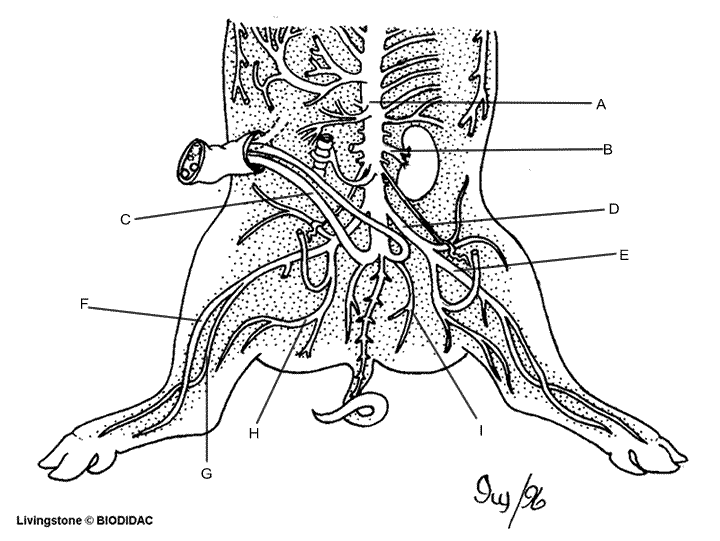
| 10. Trace the abominal aorta to the lower part of the body, careful teezing of the tissue will reveal several places where it branches, though some of the arteries may have been cut when you removed organs of the digestive system. | |
| 11. The hepatic artery leads to the liver. (may not be visible) | |
| 12. The splenic artery leads to the spleen (may not be visible) | |
| 13. The renal arteries lead to the kidney. | |
| 14. The mesenteric artery leads to the mesentery and branches into many smaller vessels. (you cut the mesentery in the first part of the lab, so these arteries may not be visible) | |
| 15. Trace the abominal aorta and note where it joins the umbilical arteries. You will need to cut the muscle in the leg to trace the next vessels. Use a pin to carefully tease away the surrounding muscle and tissue. | |
| 16. The abominal aorta splits into two large vessels that lead to each leg - the external iliac arteries will turn into the femoral arteries as they enter the leg. | |
| 17. Follow the umbilical artery toward the pig, you'll find that it branches and a small artery stretches toward the posterior of the pig - this is the ilio-lumbar artery. | |
| 18. Follow the external iliac into the leg (carefully tease away muscle), it will branch into two arteries: the femoral (toward the outside of the leg) and the deep femoral (toward the inside of the leg) | |
| 19. Follow the femoral to the lower leg where it branches into the anterior tibial artery and the posterior tibial artery. | |
Label the lower abdominal arteries on the pig.
Carefully remove and examine each of the following structures.
1. Remove the stomach by cutting it transversely (crossewise) across the esophagus and duodenum. Make a longitudinal (lengthwise incicision along the stomach so that you can open it and view the inside. There are two important valves in the stomach: the cardiac sphincter (located at the anterior end) and the pyloric sphincter valve (located at the posterior) end. These valves open and close to allow food into and out of the stomach.
2. Remove the small intestine and carefully cut the mesentery so that the intestine can be stretched and measured. Note the arteries located in the mesentary - called mesenteric arteries. What is the length (in centimeters of the small intestine? ______________
Urinary and Reproductive
Systems
---Locate each of the structures below and check the box when you have found
them. Make sure to view both the male and female pig.
| 1. Locate the kidneys, the tubes leading from the kidneys that carrey urine are the ureters. The ureters carry urine to the urinary bladder - located between the umbilical vessels. | |
| 2. Lift the bladder to locate the urethra, the tube that carries urine out of the body. | |
| Male | |
| 1. Find the scrotal sacs at the posterior end of the pig, testis are located in each sac. Open the scrotal sac to locate the testis. | |
| 2. On each teste, find the coiled epididymis. Sperm cells produces in the teste pass through the epididymis and into a tube called the vas deferens (in humans, a vasectomy involves cutting this tube). | |
| 3. The vas deference crosses over the ureter and enters the urethra, which leads to the penis. The penis will be located in the flap that has the umbilical cord. Cut away the skin to reveal the penis. | |
| Female | |
| 4. In the female pig, locate two bean shaped ovaries located just posterior to the kidneys. | |
| 5. The ovaries are connected to the fallopian tubes, which carry eggs from the ovaries to the uterus. The uterus is dorsal to the urinary bladder. | |
| 6. Trace the uterus to the vagina. The vagina will actually will appear as a continuation of the uterus. The vagina and urethra open into a common area called the urogenital sinus. | |
Label the diagrams
 |
 |
| Dissection of
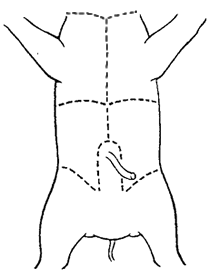
the Thoracic Cavity You may need to cut through the pig's sternum and expose the chest cavity (thoracic cavity) to view. See the diagram to make the incisions. You will need to cut all the way up into the pig's neck, almost to the chin and open the thoracic cavity. Identify each of the following organs. |
 |
| 1. Find the diaphragm again. Remember that the diaphragm separates the abdominal cavity from the thoracic cavity and it aids in breathing. | |
| 2. Remove the pericardium, which is a membrane that surrounds the heart. This membrane is also located over many of the organs and can get in the way of your view. | |
| 3. The structures visible on the heart are the two atria, the ventricle (which has two chambers but the separation is not visible from the outside), and the large Aorta - a vessel which leaves the heart. (more on the heart later) | |
| 4. Push the heart to the side to locate two spongy lungs located to the left and right side. The lungs are connected to bronchial tubes which connect to the trachea (forming a Y). | |
| 5. The trachea is easy to indentify due to the cartilaginous rings, which help keep it from collapsing as the animal inhales and exhales. The trachea should be located behind the heart and liver and near the esophagus, but note that the esophagus and trachea are separate tubes. | |
| 6. Lying ventral to the trachea, loate the pinkish-brown, V shaped structure called the thyroid gland. This gland secretes hormones that control growth and metabolism. | |
| 7. At the anterior (toward head) of the trachea, you can find the hard light colored larynx (or voice box). The larynx allows the pig to produce sounds - grunts and oinks. | |
Sketch the thoracic cavity of the fetal pig and label the trachea, heart, lungs, bronchial tubes, thyroid gland, and larynx.